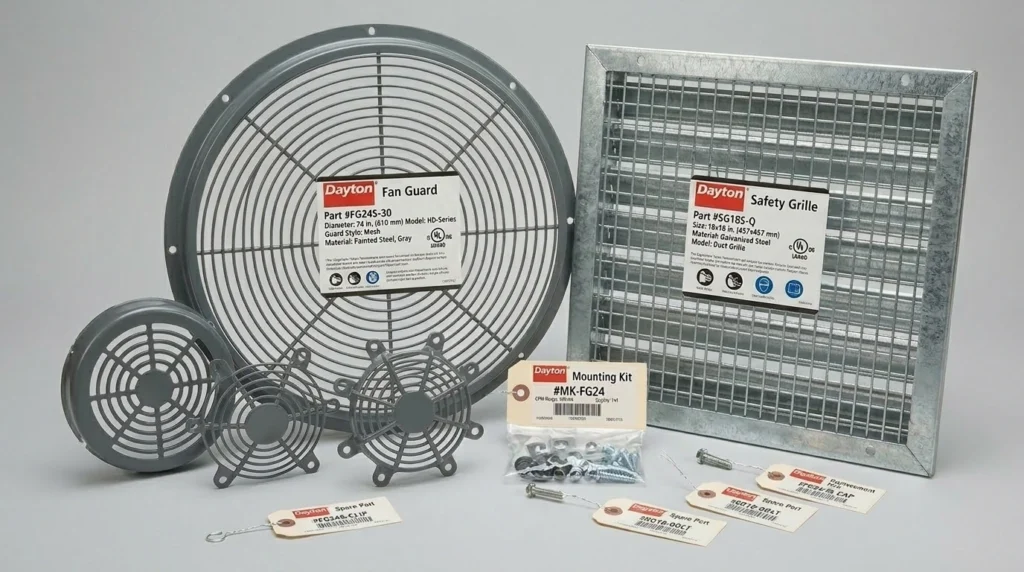
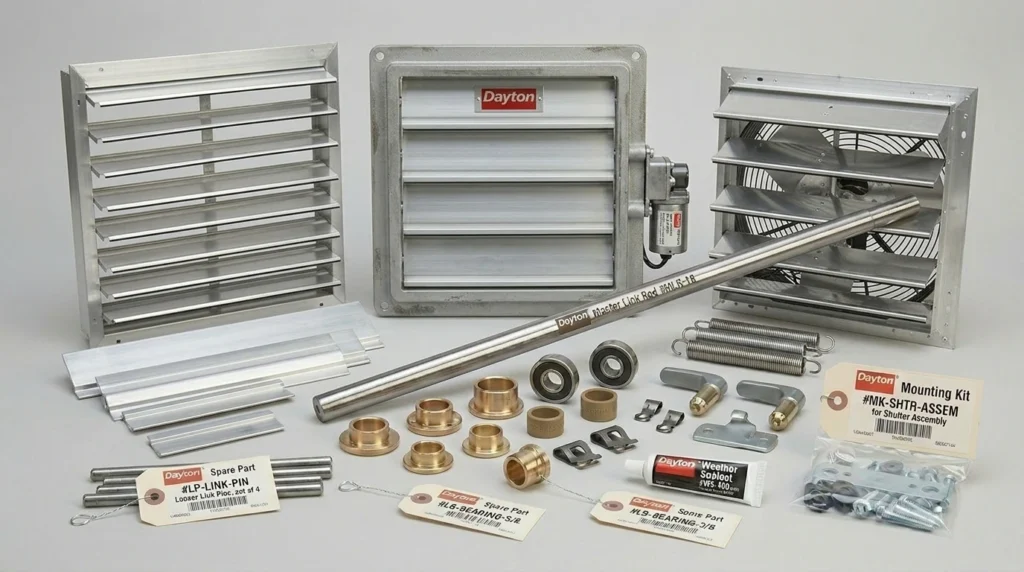
Welcome to the official Dayton fans store. Compare genuine Dayton industrial fans, blowers, and exhaust fans by specifications (CFM, voltage, and motor power). Every model below carries full specs, current price links, and an honest note on what it does best, so you can pick the right fan for your space without guessing. Prices run from $22.19 for the 6 inch clip on to $1,288 for the 60 inch drum fan.
Twelve genuine Dayton industrial fan models, compared side by side.
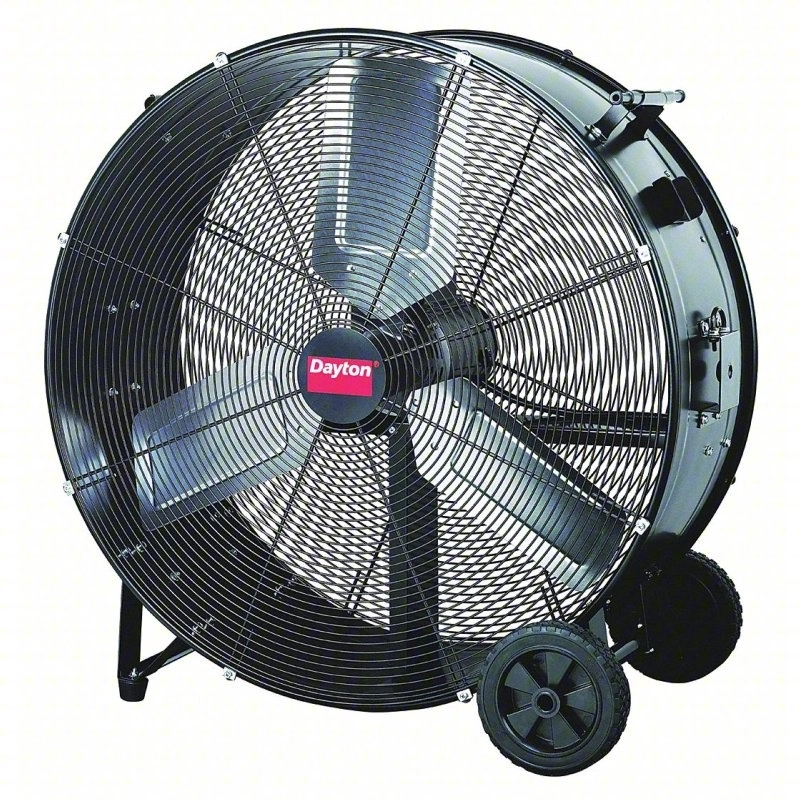
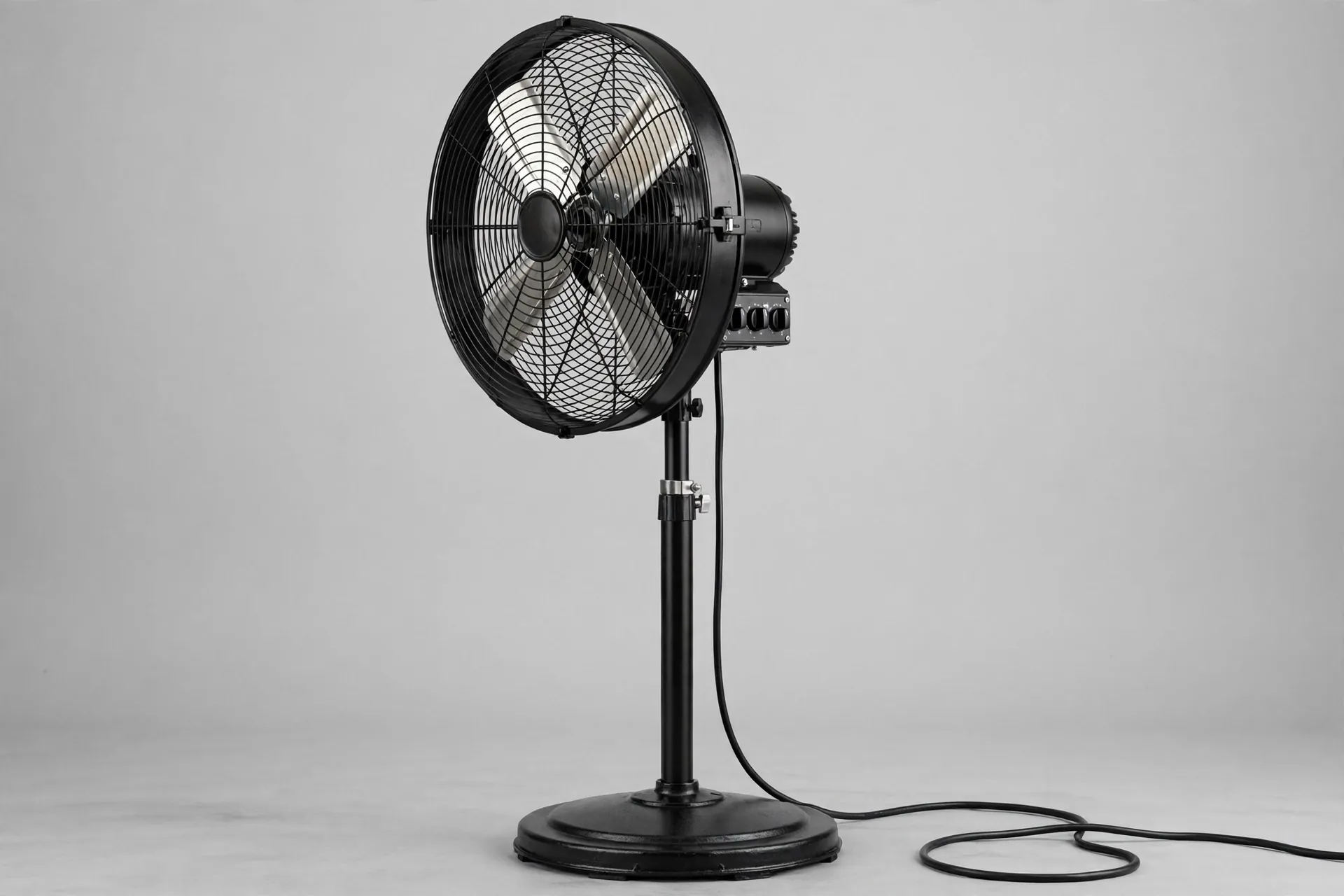
Dayton 39UK52 Circulating Fan, 24 In, 4,150/6,200 CFM
$304.99
If the heat follows the job around the shop, this fan follows it. It is built for shops and warehouses that need serious air movement from a mobile unit.
Airflow: 4,150 / 6,200 CFM
Voltage: 115V AC, 1 phase
Size: 27 1/2 in square footprint
Use: shops and warehouses that need serious air movement from a mobile unit
Keep in mind: the base is 27 1/2 in square. Give it room on the floor.
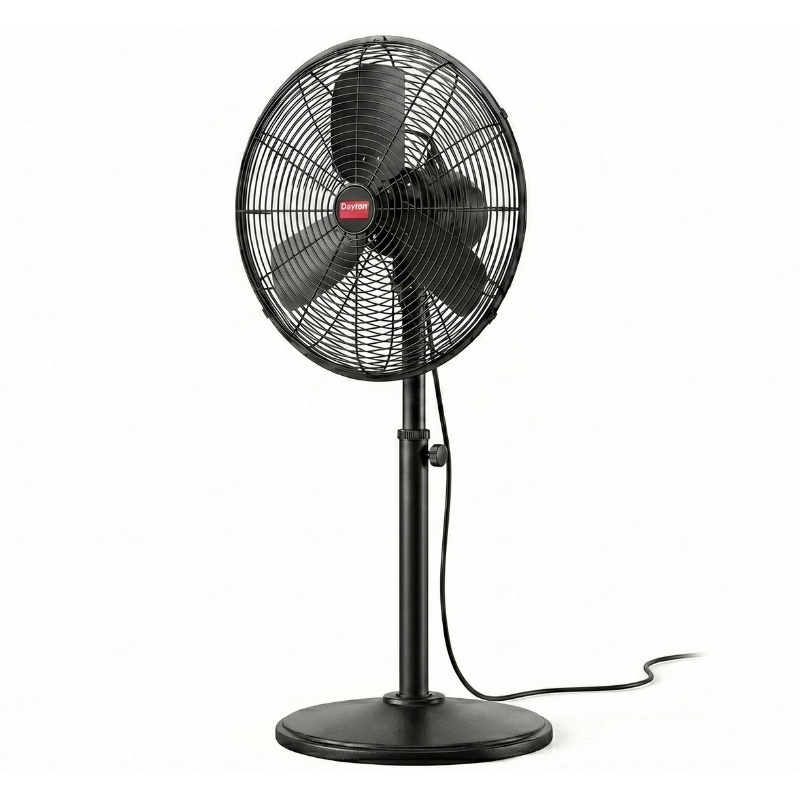
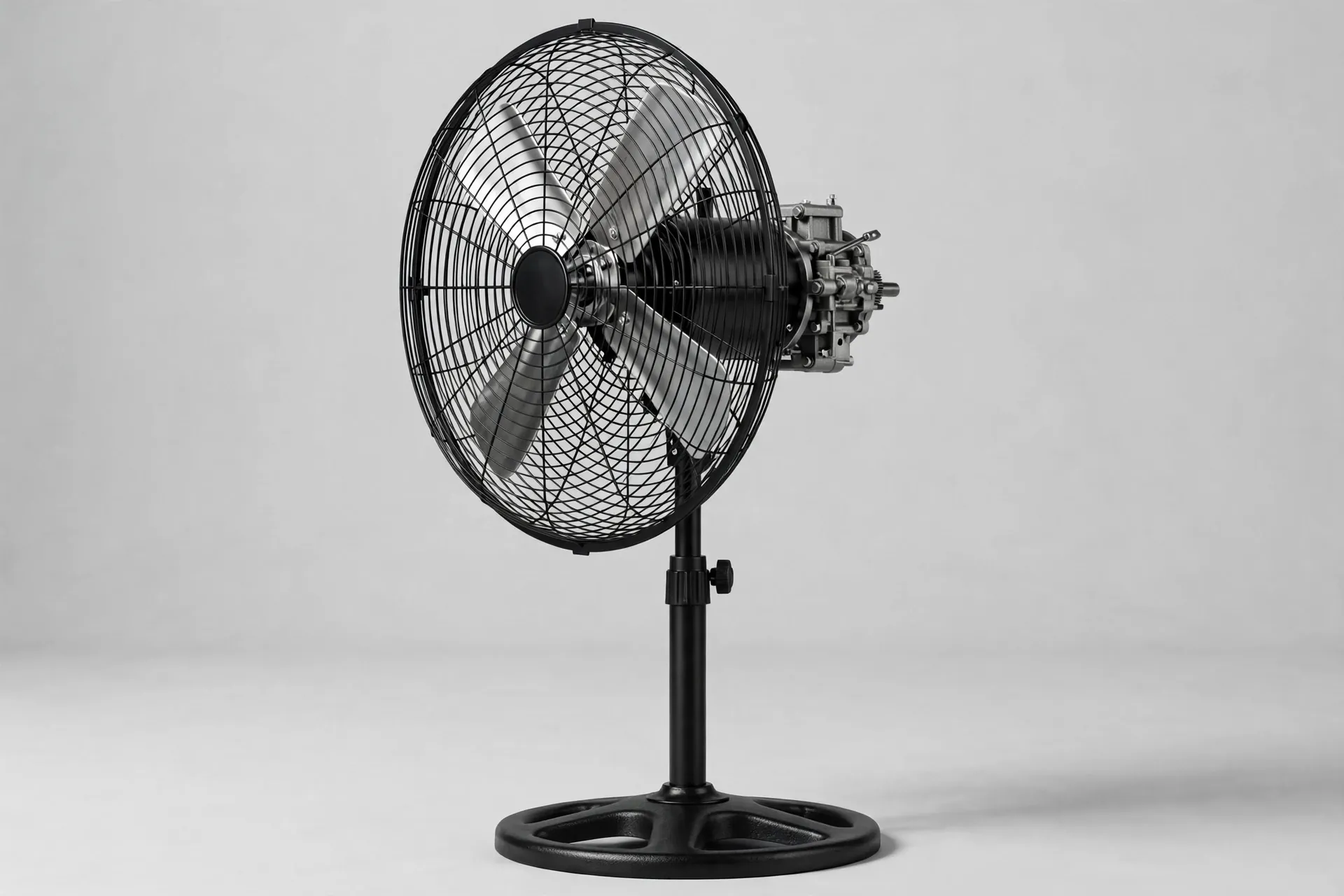
A tall stand in the middle of the room, not a corner unit. Raise the column to the height the room needs and set the fan where people work. At 79 in at full height it needs its own patch of floor, and the head stays fixed where you aim it.
Airflow: 4,650 / 7,250 CFM
Voltage: 120V AC, 1 phase
Motor: 1/4 horsepower. It pulls 2.9 amps on high and 1.9 amps on low.
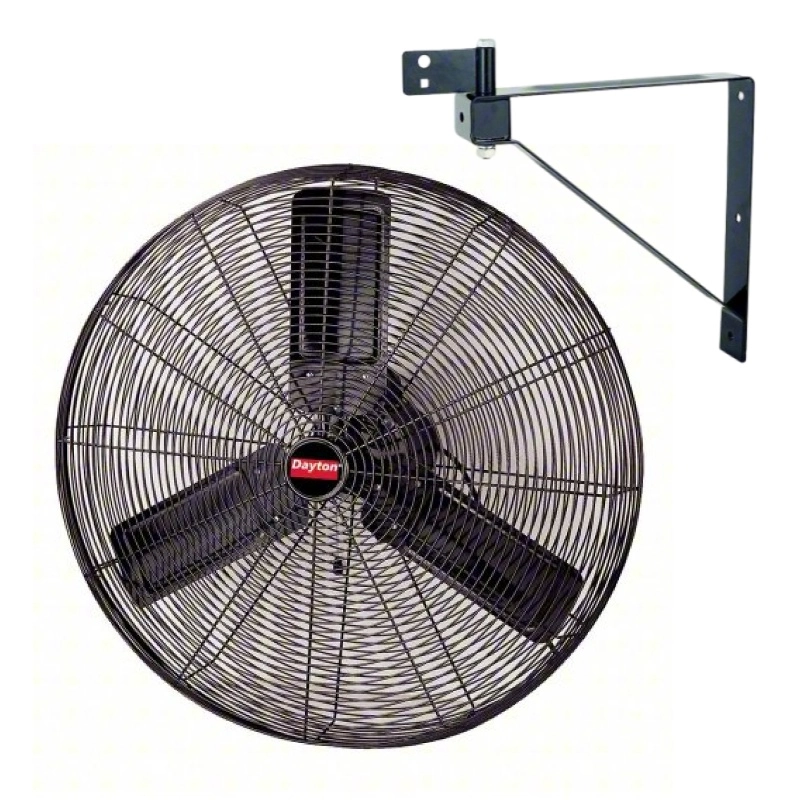
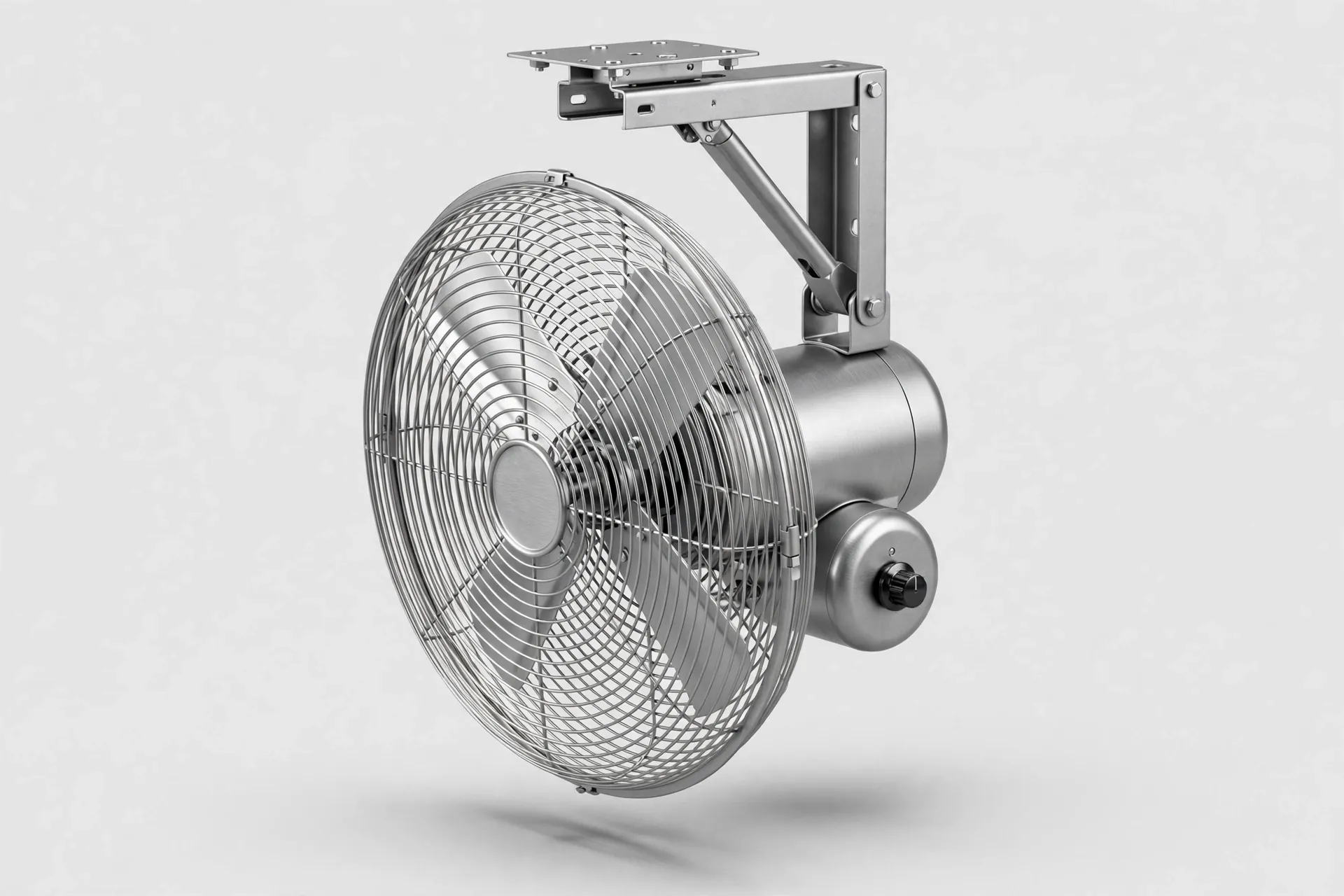
Dayton 1RWB4 Wall/Ceiling Fan, 30 In, 4,650/7,250 CFM
$267.99
When the floor is already full, the fan goes up. Fix it to a wall or a ceiling above the work, with the bracket included. Nothing stands on the floor at all. Once it is up, the air goes one way only.
Airflow: 4,650 / 7,250 CFM
Voltage: 120V AC, 1 phase
Motor: 1/4 horsepower. It pulls 2.9 amps on high and 1.9 amps on low.
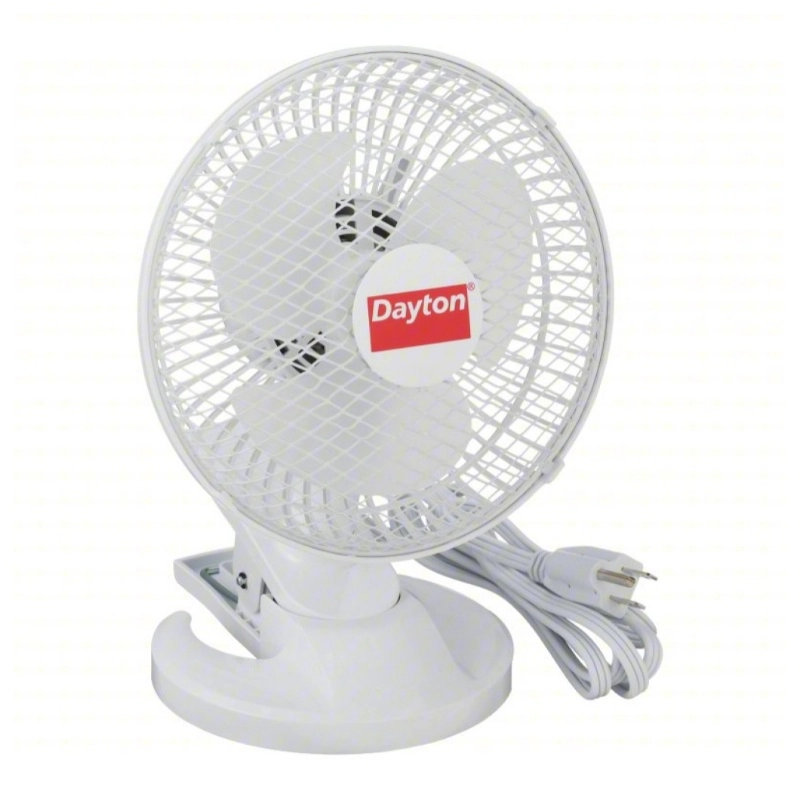
You need air at one bench, not across the whole room. Clip it to a desk or a bench, or stand it on the removable base beside the machine you are working on. It cools one person, nothing beyond that.
Airflow: 200 / 342 CFM
Voltage: 120V AC
Motor: 16 watts on high and 10 watts on low. It pulls 0.19 amps on high and 0.12 amps on low.
Speeds: 2. The blade spins 2,200 times a minute on high and 1,600 times a minute on low.
Size: 6 in blade; clip on + removable base
Keep in mind: a 6 inch blade will not cool a room. The maker lists no horsepower figure for this small fan, so judge it by its airflow: 200 CFM on low and 342 CFM on high.
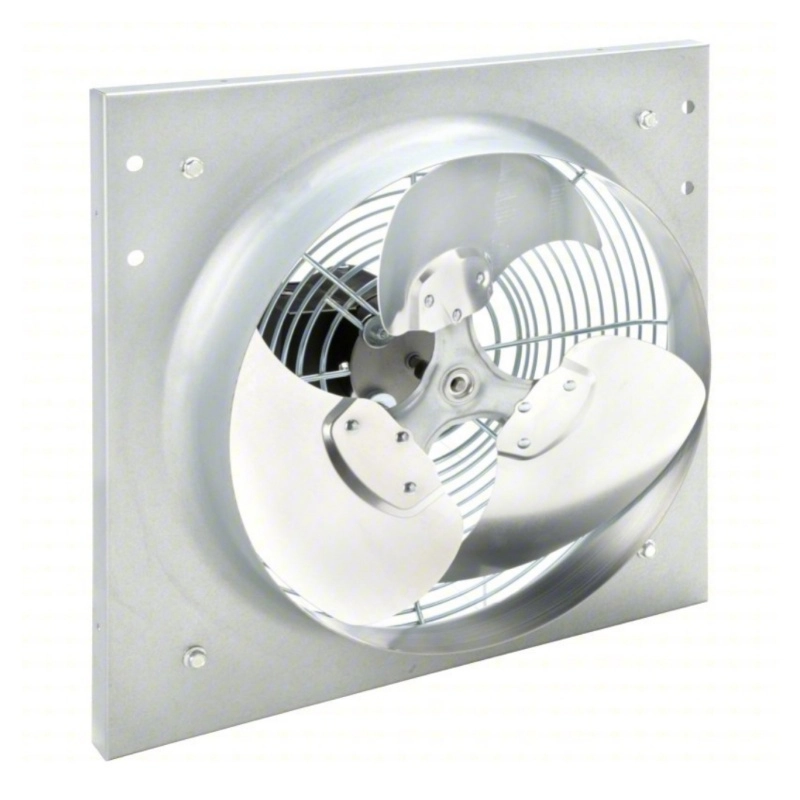
Stale air out. That is the whole job. Mount it in the wall, switch it on, and leave it to exhaust. One speed only, nothing to adjust. The 889 CFM figure is for a clear path. If the air has to push through a grille or a wall opening, the number drops to 733 CFM and then 509 CFM, because the fan works against that resistance.
Airflow: 889 CFM with a clear path, 733 CFM with some resistance, 509 CFM with more resistance
Voltage: 115V
Motor: 1/30 horsepower. It pulls 1.8 amps when running and spins 1,600 times a minute.
Speeds: 1 (single speed)
Size: 12 in propeller; 16 x 16 in overall; 8 3/8 in depth; wall mount
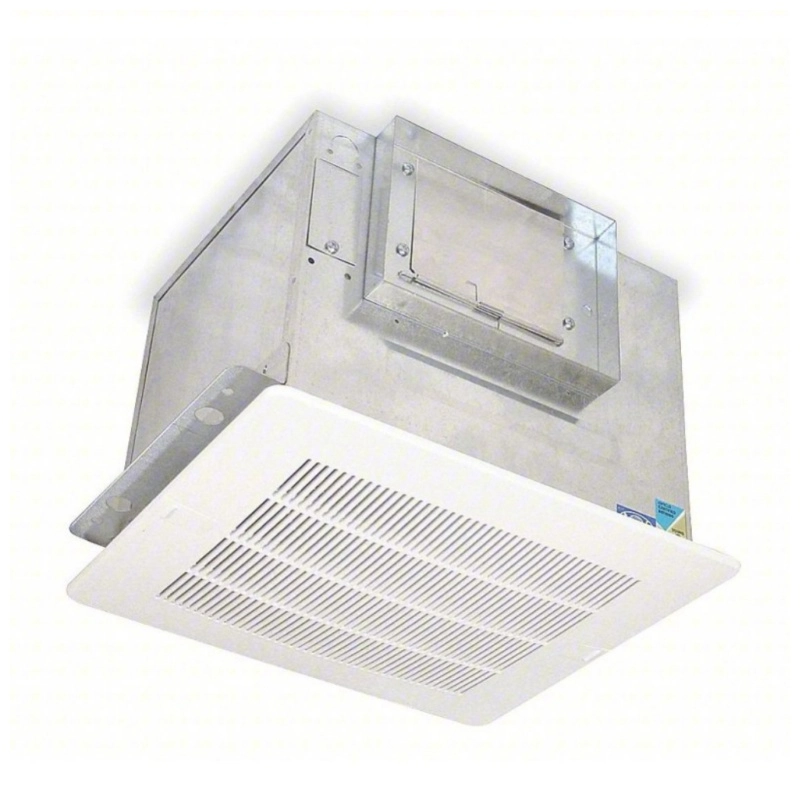
The duct run comes first. This one mounts in a ceiling or a roof and pushes stale air out through an 8 in rectangular duct. The run has to be in place before the fan goes in. It runs on one speed and keeps running steadily once it is on. The 557 CFM figure is for a clear path. Push the air down a long duct run and the number drops to 512 CFM and then 439 CFM, because the fan works against that resistance. Plan the duct run first, because the duct is 8 in rectangular and the fan has one speed only.
Airflow: 557 CFM with a clear path, 512 CFM with some resistance, 439 CFM with more resistance
Voltage: 115V AC
Motor: 224 watts, 3.3 amps when running. The maker lists no horsepower figure for this model. Use the airflow figure to pick it: 557 CFM with a clear path.
Speeds: 1. The blade spins 1,070 times a minute.
Size: 8 in rectangular duct; 14 1/2 H x 14 3/8 W x 18 D in
Dayton 61LD79 Pedestal Fan, 20 In, 2,700/3,650 CFM
$160 – $195
No sweep, no swing, just one steady stream where you point it. The head tilts to the bench or the work area and holds that direction. The column rises to 62 in, and the 9 ft cord reaches an outlet that is not right beside the fan.
Airflow: 2,700 CFM on low, 3,150 CFM on medium, 3,650 CFM on high
Dayton 13V399 Oscillating Pedestal Fan, 20 In, 5,100/6,200 CFM
$265 – $320
For a wide room where one spot takes the full blast and the rest gets nothing, this one sweeps the air across instead. Oscillating means the head turns side to side while it blows. Two speeds only, and it is built for high volume, not fine control.
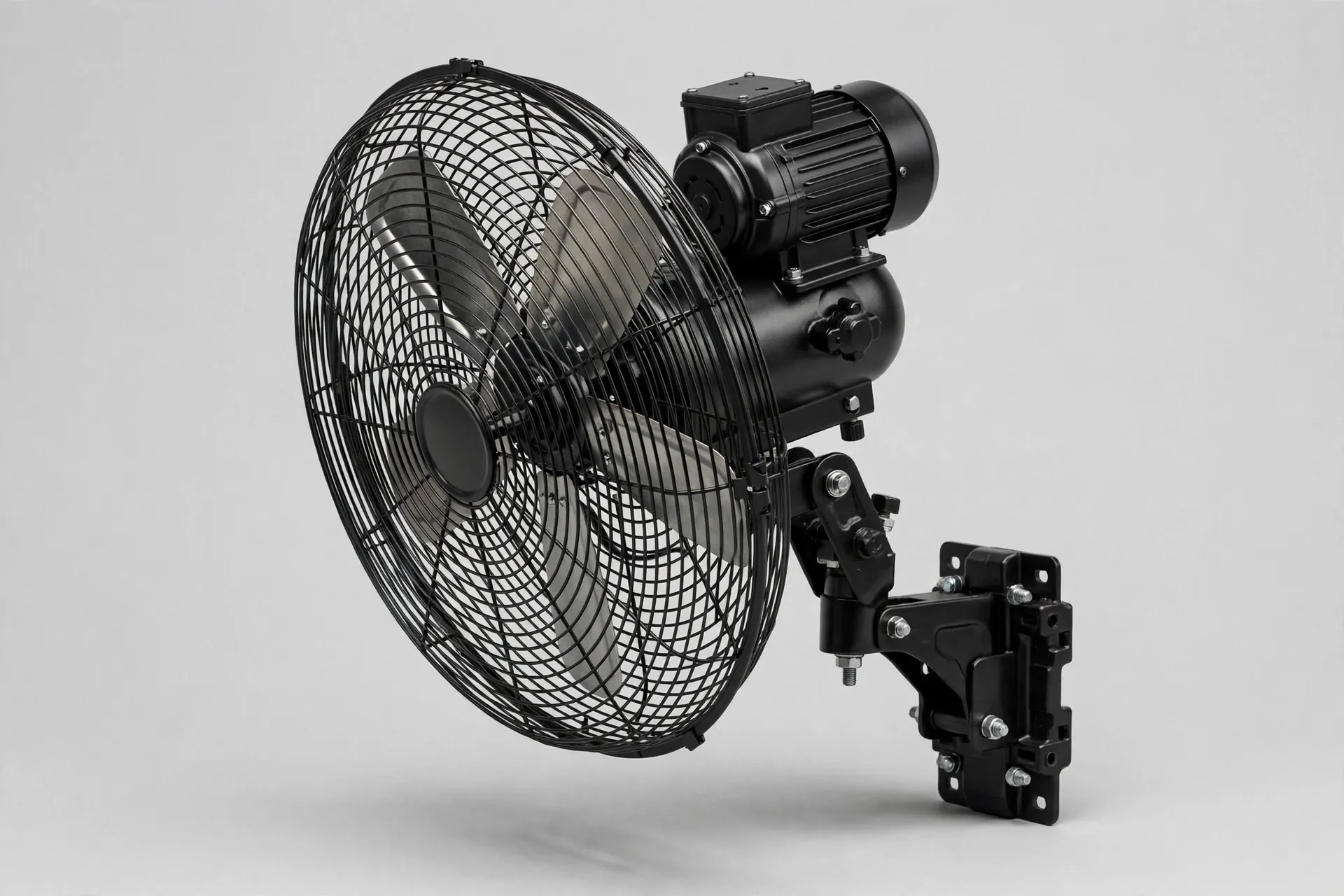
Dayton 13V402 Oscillating Wall Mount Fan, 20 In, 5,593/7,966 CFM
$380
High on the wall, out of the way, sweeping the air across the room. Oscillating means the head turns side to side while it blows. It moves 5,593 to 7,966 CFM across large spaces, the most air of any 20 inch fan on this page.
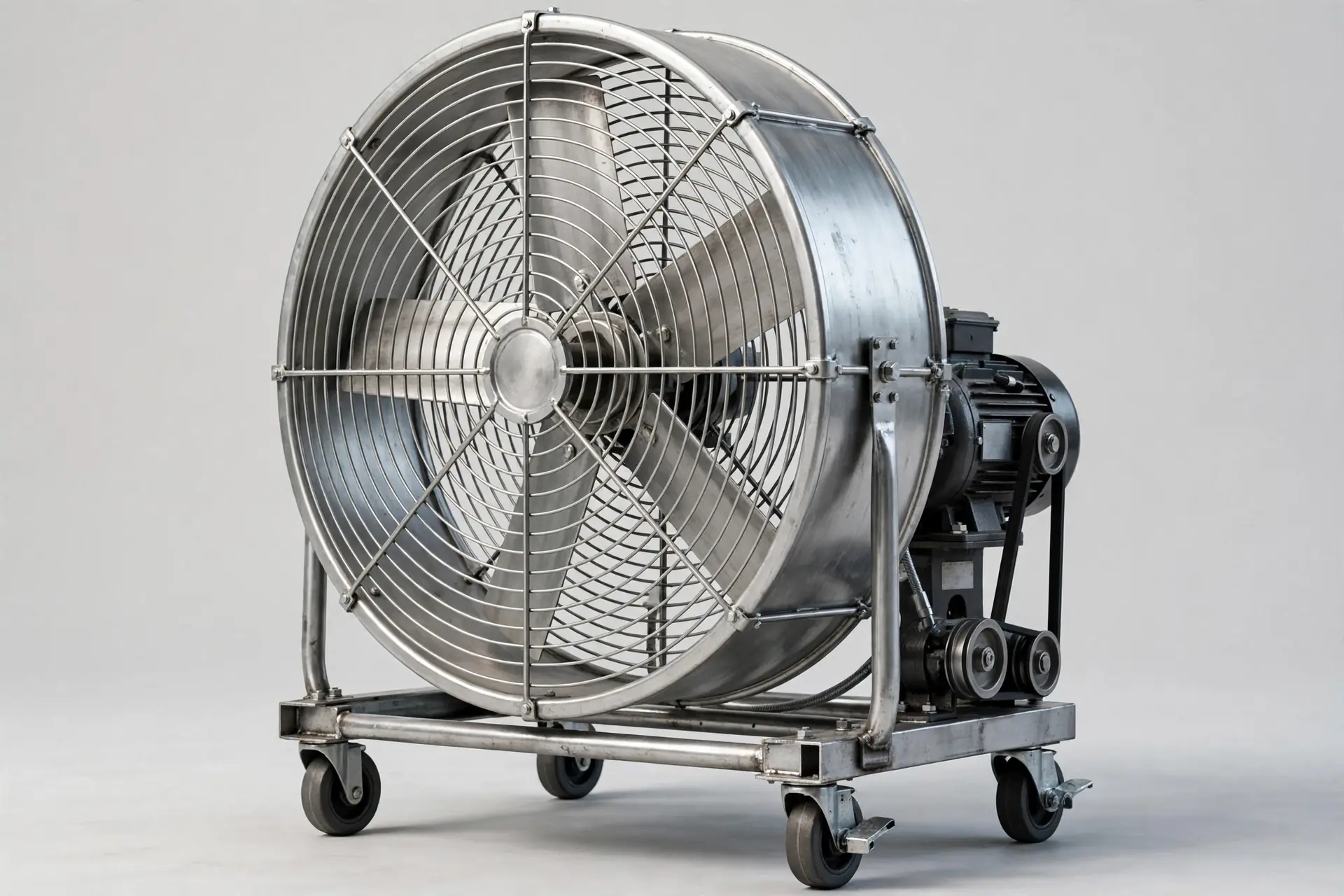
Dayton 855DZ2 Portable Fan, 60 In, 16,000/17,000 CFM
$1,288
It is sixty inches on wheels and moves 16,000 to 17,000 CFM. Roll it to where the heat sits. The belt drive keeps the noise down at this size. Check the space and the power first.
Follow these four steps in order and you will land on the right fan.
Measure your space. Length times width gives the square footage, the size of the floor in square feet, and ceiling height tells you whether you need circulation or exhaust. Circulation moves air around the room. Exhaust pushes stale air out of the building.
Match the airflow to the job. The 24 inch models move 4,150 to 6,200 CFM and the 30 inch models move 4,650 to 7,250 CFM for large spaces. The 6 inch clip on at 200 to 342 CFM is for personal cooling at a bench. A 2 car garage needs 2,000 CFM of exhaust, and the exact pair is in the garage answer in the questions below.
Check voltage and mounting first. Most models run on 115 to 120V single phase. That is normal household power, and single phase is the standard supply in a normal house. A fan marked 115V plugs into a normal 120V outlet, because 115V and 120V are the same household supply. Decide pedestal, wall or ceiling, or ducted first. Pedestal means the fan stands on a tall pole with a base. Wall or ceiling means it bolts up high. Ducted means the air leaves through a duct, a tube that carries air out through the roof or wall.
Weigh noise and power draw. Belt drive models tend to run quieter than direct drive at the same CFM. Belt drive means a belt joins the motor to the blade. Direct drive means the motor joins straight to the blade, with no belt. Amp draw is how much electricity the fan pulls, and the figure is on each card below. Your circuit is the wiring behind one switch in your breaker box, and the number printed on that switch is the circuit size in amps. The fan number must be lower than the circuit number. If you are not sure, call 1 800 472 4643 and ask.
Plain words for the specs below. HP means horsepower, the power of the motor. Amps means how much electricity the fan pulls. Watts means power use. RPM means how many times the blade spins in one minute.
CFM means cubic feet per minute: the volume of air a fan moves in one minute. A higher CFM moves more air. Match the CFM to your space: a 30 inch circulator at 7,250 CFM suits large shops, while a 200 to 342 CFM clip on suits a workbench.
A 2 car garage needs 2,000 CFM of exhaust. That figure comes from a 20 by 30 by 10 ft space, 6,000 cubic feet, with the air changed every 3 minutes: 6,000 divided by 3 equals 2,000. One Dayton 484X40 exhaust fan moves 1,785 CFM, which is 215 CFM short on its own: 2,000 minus 1,785 equals 215. Pair it with one Dayton 10D954 at 889 CFM and you have 2,674 CFM: 1,785 plus 889 equals 2,674, which clears the 2,000 CFM need by 674 CFM. The 484X40 is an 18 inch shutter mount exhaust fan at $249.99. Measure the wall opening before you order it. The 10D954 is card 6 on this page at $192.99. If you want moving air in the garage rather than exhaust, buy the 61LD79 on this page instead. It moves 2,700 CFM on low, which clears 2,000 CFM on its own, and it starts at $160.
Compare motor horsepower, airflow per dollar, and build. Airflow per dollar means CFM divided by price. The 6 inch clip on moves 342 CFM on high and costs $22.19, so 342 divided by 22.19 equals about 15 CFM per dollar. Higher is more air for your money. On build, steel housings and ball bearing motors last longer than plastic sleeve bearing ones. A ball bearing motor spins on small steel balls, while a sleeve bearing motor spins inside a plain sleeve. Cheaper fans cost less up front. The math that matters is cost per year of service: divide the price by the years it lasts. Say a $324.99 fan lasts 10 years, that is $32.50 a year. Check the warranty terms on the specific listing.
The price links under each fan on this page go to current Amazon listings. Grainger also stocks the full Dayton line. Compare both, and check the listing, because prices change.
There is no single Dayton warranty. Check the warranty terms on the specific product listing, and keep your receipt.
Customer service
For a warranty claim, or a question about what a defect covers, call Dayton Customer Support. The same phone line and email cover technical support on parts and maintenance. Call 1 800 472 4643 or email info@daytonfansco.com.
Customer service 2321 Needmore Road, Dayton, OH 45414 +1 800 472 4643 info@daytonfansco.com Mon to Fri: 8AM to 6PM EST
Warranty claim
The warranty covers specific industrial fans, blowers, and exhaust systems. If your fan has a defect, the maker warranty covers it. To file a claim, call 1 800 472 4643 or email info@daytonfansco.com, with the fan model number and proof of purchase ready.
Pick the fan above, check the price, and call 1 800 472 4643 if you need help choosing.
Check Our Store
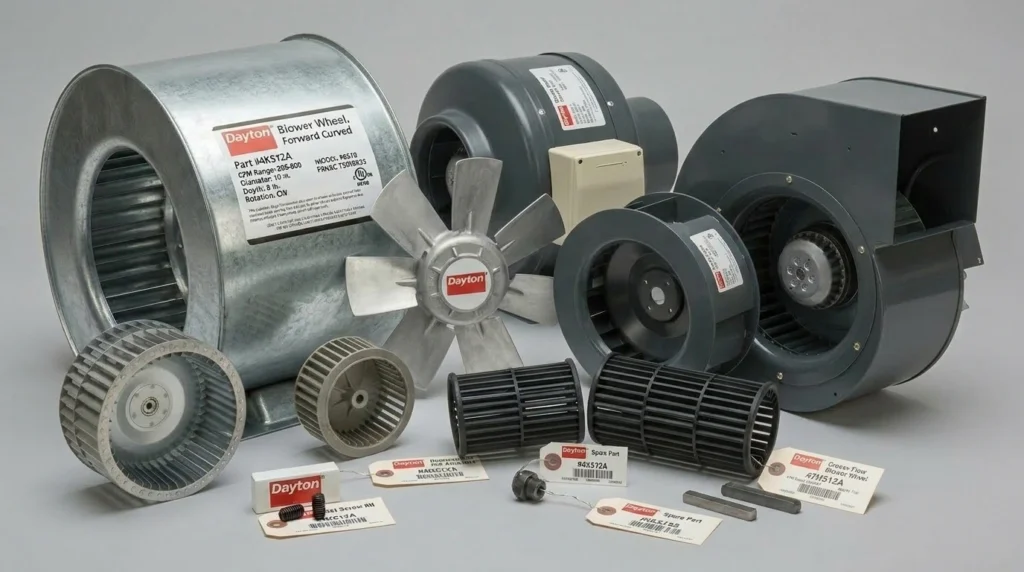
Browse the full Dayton range on Amazon: fans, blowers, and genuine replacement parts, all in one place.