
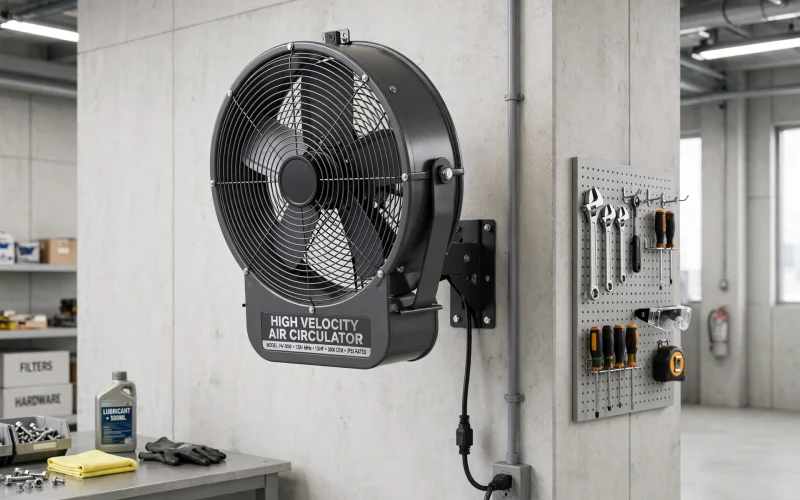
Dayton wall and ceiling fans bolt to a wall or ceiling and stay put, and they use zero floor space. Pick a circulator if you want air moved around a room, and pick the ventilator if you want stale air pushed out of the building. Three models on this page are circulators and one model is a ventilator, so start with that job and the right model follows.
You need a stud to bolt into, and the right voltage for the model you pick. A stud is the solid wood beam inside the wall. If you pick the ventilator, you also need ductwork, and a short straight run works best. Ductwork is the tube that carries stale air out of the building.
Dayton wall and ceiling fans
Follow this route to pick one and mount it right.
- Start with the job. A circulator moves air around a room. A ventilator pushes stale air out. Only one model on this page does the second job.
- Pick the spot before you drill. Mount a wall fan 7 to 9 feet off the floor so the airflow hits the work zone and clears people and equipment. That height is for a wall fan only.
- Bolt into solid structure, never drywall alone. Drywall is the flat board that covers the wall, and it cannot hold a vibrating fan by itself. Drywall anchors pull out over time under a vibrating fan.
- Leave clear space around the blade. The 30 inch model needs at least 30 inches of clear space around it, with nothing inside the circle the blade turns in. The oscillating head needs room to turn from side to side.
- Check the voltage on the listing before you buy. The three circulators take 120V and the ventilator takes 115V. Voltage is the power the fan needs.
- Run the checks in the After installation checks section below once the fan is running.
Featured Dayton Wall and Ceiling Fans
Four wall and ceiling models that cover the main spaces in this guide.
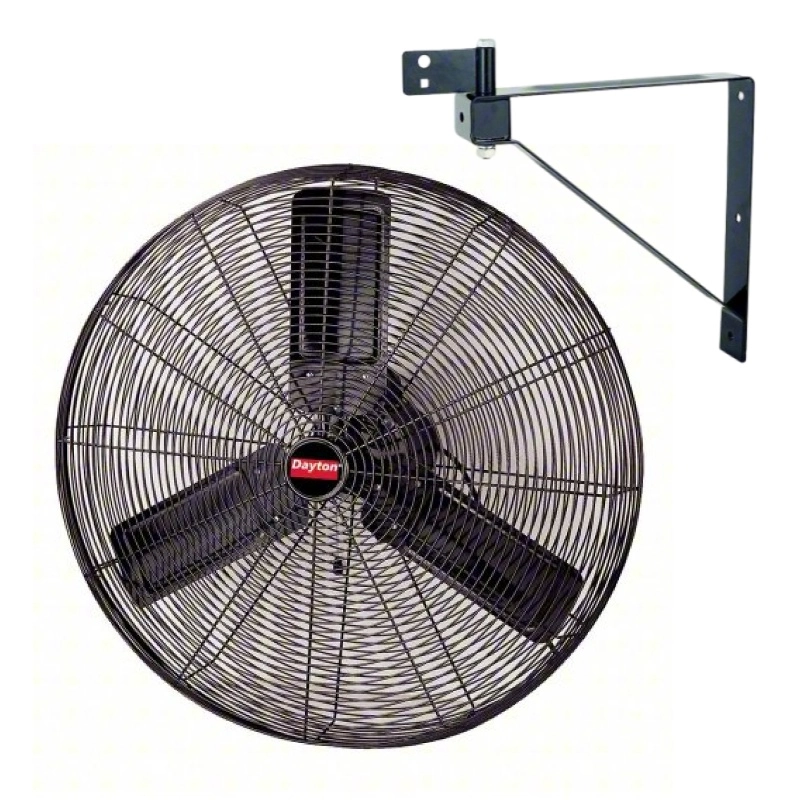
Dayton 1RWB4 Wall/Ceiling Fan, 30 In, 4,650/7,250 CFM
$267.99
Our 30-inch wall-mount circulator, built for shops and warehouses that need serious air movement with zero floor footprint.
- Airflow: 4,650 / 7,250 CFM
- Size: 30-inch wall/ceiling
- Voltage: 120V AC, 1-phase
Worth noting: Non-oscillating; mount into a stud or structural member, not drywall alone.

Dayton 2LY99 Wall/Ceiling Fan, 20 In, 2,600/3,700 CFM
$227 – $240
Our 20-inch wall-mount circulator for medium spaces that need permanent, out-of-the-way airflow.
- Airflow: 2,600 / 3,700 CFM
- Size: 20-inch wall/ceiling
- Voltage: 120V
Worth noting: Pick the mounting location before installation; the bracket is permanent.

Dayton 13V402 Oscillating Wall-Mount Fan, 20 In, 5,593/7,966 CFM
$380
Our 20-inch oscillating wall-mount fan for large commercial spaces that need wide-area air movement.
- Airflow: 5,593 / 7,966 CFM
- Type: Oscillating wall-mount
- Voltage: 120V
Worth noting: Oscillating head needs clear space to sweep; check clearance before mounting.
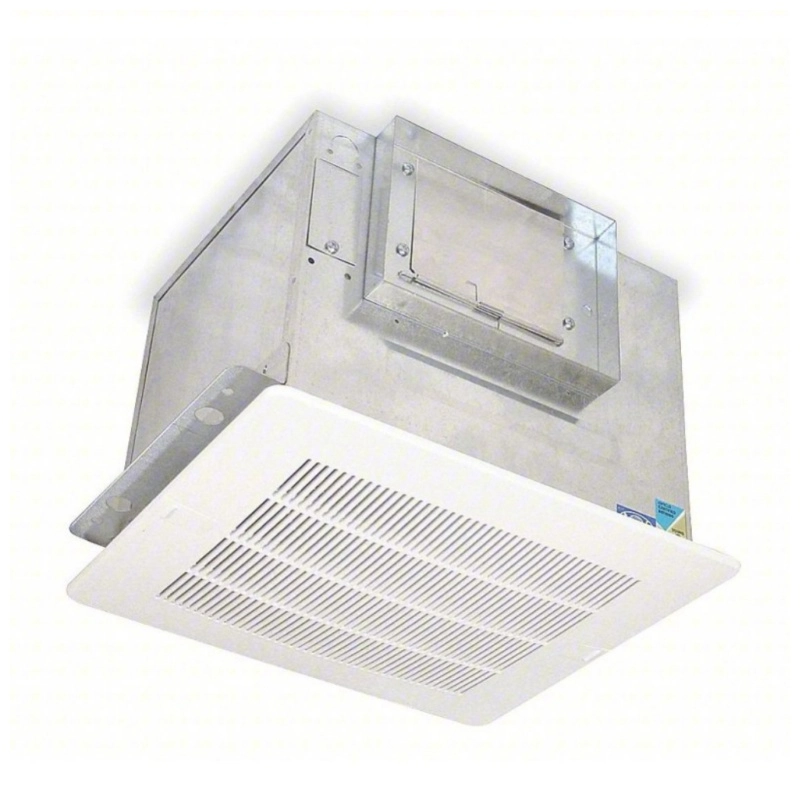
Dayton 5AE75 Ceiling Ventilator, 557 CFM
$453.99
Our ducted ceiling and roof ventilator for exhausting air through ductwork from commercial spaces.
- Airflow: 557 CFM
- Type: Ducted ceiling ventilator
- Voltage: 115V AC
Worth noting: Needs ductwork; plan a short, straight duct run for best performance.
Pick by space and job
CFM means cubic feet per minute. It is how much air the fan moves each minute. More CFM means more air.
Only two models on this page are rated for wall and ceiling mounting. They are the 1RWB4 and the 2LY99. The 13V402 is wall only. It is not rated for ceiling mounting. The 5AE75 is ceiling or roof only. Wall fans and ceiling fans use different mounting hardware and weight ratings, so do not ceiling mount a wall only fan.
| Model | Size | Job | Airflow | Price |
|---|---|---|---|---|
| 2LY99 | 20 inch | Circulator | 2,600 to 3,700 CFM | $227 to $240 |
| 1RWB4 | 30 inch | Circulator | 4,650 to 7,250 CFM | $267.99 |
| 13V402 | 20 inch | Oscillating circulator | 5,593 to 7,966 CFM | $380 |
| 5AE75 | 12 inch | Ventilator | 557 CFM | $453.99 |
Prices checked 14 November 2026.
1. 2LY99 20 inch wall and ceiling fan
For a medium space, take the 2LY99. It is rated for wall and ceiling mounting. It gives 2,600 to 3,700 CFM from a 20 inch blade, and at $227 to $240 it is the cheapest of the four. The price is a range because the listing shows $227 to $240, so check the listing for the exact price before you buy. The bracket bolts to the wall and stays there, so it suits a space that needs permanent airflow, fixed in place and out of the way.
Keep in mind: the bracket is permanent. Pick the mounting location before installation.
2. 1RWB4 30 inch wall and ceiling fan
The 1RWB4 is the only 30 inch model on this page. It is rated for wall and ceiling mounting. Airflow runs 4,650 to 7,250 CFM from up high, and it costs $267.99. It does not oscillate. It is built for shops and warehouses that need serious air movement with zero floor footprint, and it is best for large spaces where floor space is precious.
Keep in mind: it does not oscillate. Give the blade at least 30 inches of clear space around it, with nothing inside the circle the blade turns in.
3. 13V402 20 inch oscillating wall fan
For a large commercial space where a fan runs for long hours near people, the 13V402 is the one to buy. It is wall only. It is not rated for ceiling mounting. Oscillating means the head turns from side to side while it runs. The 20 inch blade puts out 5,593 to 7,966 CFM, the highest air of the four, and the head turns from side to side so the air spreads instead of blasting one spot. It costs $380. On low speed the figure is 5,593 CFM, more air than the 30 inch model gives on low speed at 4,650 CFM, so blade size alone does not settle it.
Keep in mind: the turning head needs room to turn. Check the clearance before you mount it.
4. 5AE75 12 inch ceiling ventilator
Stale air has to leave the building. That job belongs to the 5AE75 alone. It is a 12 inch ceiling ventilator that mounts in a ceiling or roof and pushes air out through ductwork, so plan a short, straight duct run. It is ceiling or roof only. Airflow is 557 CFM, the lowest of the four, and at $453.99 it is the highest price. That is the most money and the least air of the four, and it costs $186.00 more than the 1RWB4. Its job is removal, not circulation, and removal costs more. For ducted exhaust sizing, see the exhaust fans guide.
Keep in mind: it needs ductwork, and it is the only model on this page that does.
Installation
The three circulators take 120V and the ventilator takes 115V. Check the voltage on the listing before you buy.
A wall fan throws a horizontal beam of air across the room. Aim that beam at a work zone or a walkway. A ceiling fan pushes air downward, which suits an open area where people gather below.
Check whether your model is plug in or hardwired on the product page before you buy.
If you need airflow in different spots instead of one fixed location, a pedestal fan fits better. For cooling large open areas, drum fans move more air than wall fans.
After installation checks
Do these checks once the fan is running.
- Test every speed. Run the fan on each speed setting. If a speed does nothing, switch the fan off and call +1 800 472 4643 for help.
- Check for vibration. Put your hand on the mount. Vibration that you can feel means the mount is loose or the blade is unbalanced. Switch the fan off, tighten the bolts, and run it again. If you still feel vibration, call +1 800 472 4643 for help.
- Check clearance again. Walk the area under and around the fan. Nothing should pass through the circle the blade turns in. Move anything that sits inside that circle before you run the fan again.
- If your model has a cord and plug, check the cord and plug. The cord should hang clear of the blade and the mount. No pinches, no fraying. If the cord is pinched or frayed, do not run the fan. Call +1 800 472 4643 for help.
- Listen for a full minute. A new rattle or squeal that shows up in the first minute of running points to a loose bolt. Switch the fan off and tighten the bolts.
Check the bolts again after the first week of use. Vibration settles hardware, and a bolt that was tight on day one can loosen. Tighten any bolt that has loosened.
What to do next
Pick your model from the table above and mount it into a stud or solid beam. If you are unsure which fan type fits, the how to choose guide walks through the options. Call +1 800 472 4643, Mon to Fri 8AM to 6PM EST, if you need help.
Frequently Asked Questions
No, unless the fan is specifically rated for ceiling mounting. Wall fans and ceiling fans use different mounting hardware and weight ratings. Check the listing before you buy.
A wall fan throws a horizontal beam of air across the room, which suits work zones and walkways. A ceiling fan pushes air downward, which suits open areas where people gather below.
Plug-in models are a DIY job: mount the bracket and plug it in. Hardwired models should be installed by a licensed electrician to meet code and keep the warranty valid.
Mount it 7 to 9 feet off the floor. That clears people and equipment while keeping the airflow in the zone where you feel it.